Lewati ke konten
FAMEDIACase study AR Physics App on Heat & Temperature with Local Wisdom
Website & App · 2026

AR Physics App on Heat & Temperature with Local Wisdom

An Android Augmented Reality app on heat and temperature that lets students observe and investigate heat through the local tradition of Jambi bamboo-cooked lemang.
Client
Confidential client
Industry
Education
Location
Indonesia
Service
Website & App
Year
2026
Tools & technology
Unity 6 LTS (URP), EasyAR, C#, Android
01

Challenge

The client, a master's student in physics education, needed a learning tool for their thesis research. Heat and temperature involve things students cannot see, such as particle motion and heat transfer, so the topic is hard to picture, and textbook examples often feel far from everyday life.

The tool had to follow the storyboard and Problem Based Learning steps designed in the research, use the cultural context of Jambi bamboo lemang, and still run smoothly on the phones students typically own: Android 7.1 with 2 GB of RAM.

02

Goals

  • Make abstract heat phenomena visible through AR objects and particle zoom
  • Follow the Problem Based Learning steps of the research storyboard
  • Run smoothly on Android 7.1 phones with 2 GB of RAM
  • Indonesian interface text, as written in the storyboard
03

Process

  1. Storyboardturning the research storyboard into a screen map, texts and activity steps
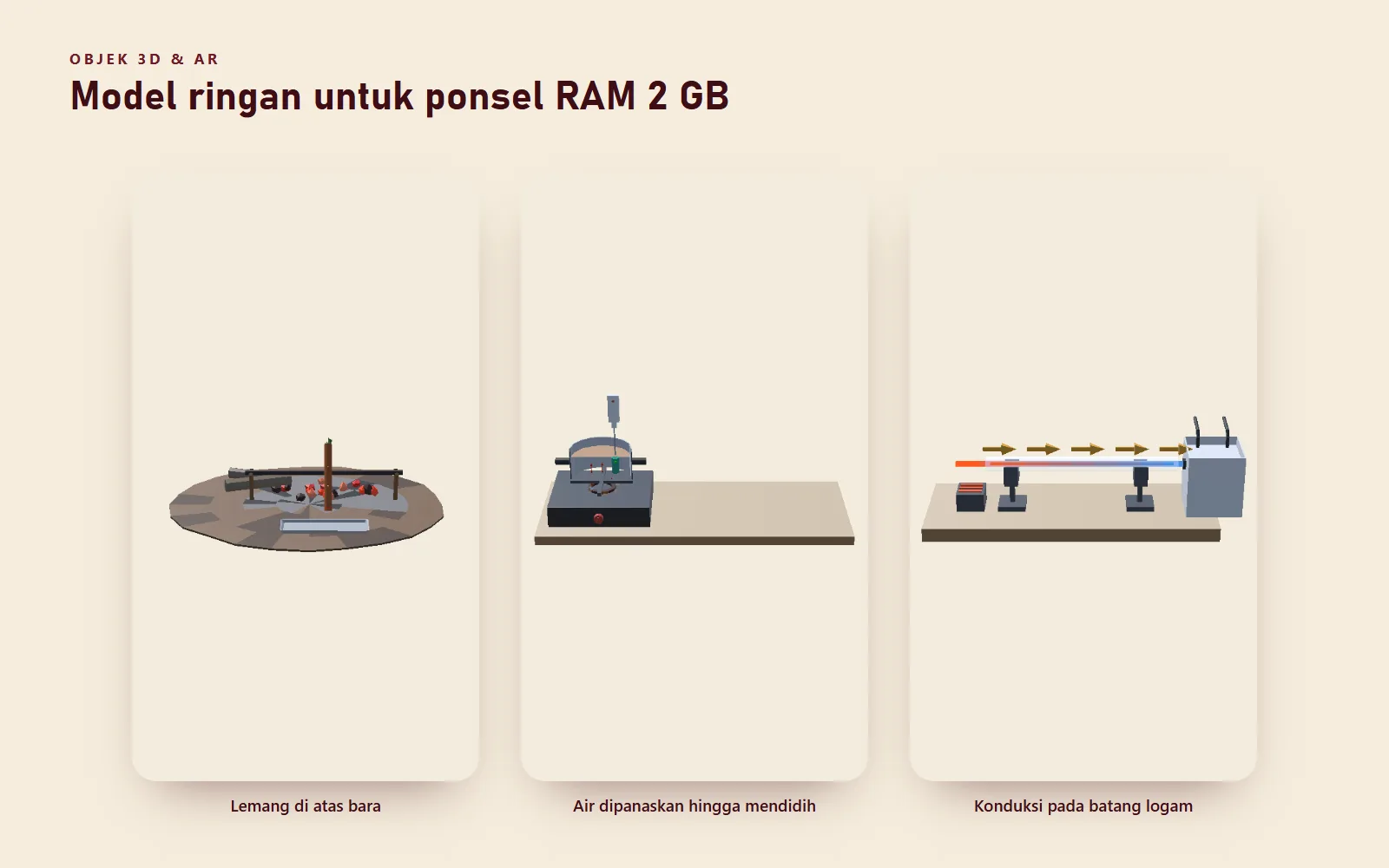
  2. 3D modelsbamboo lemang, an ember hearth and lab apparatus on a strict polygon budget
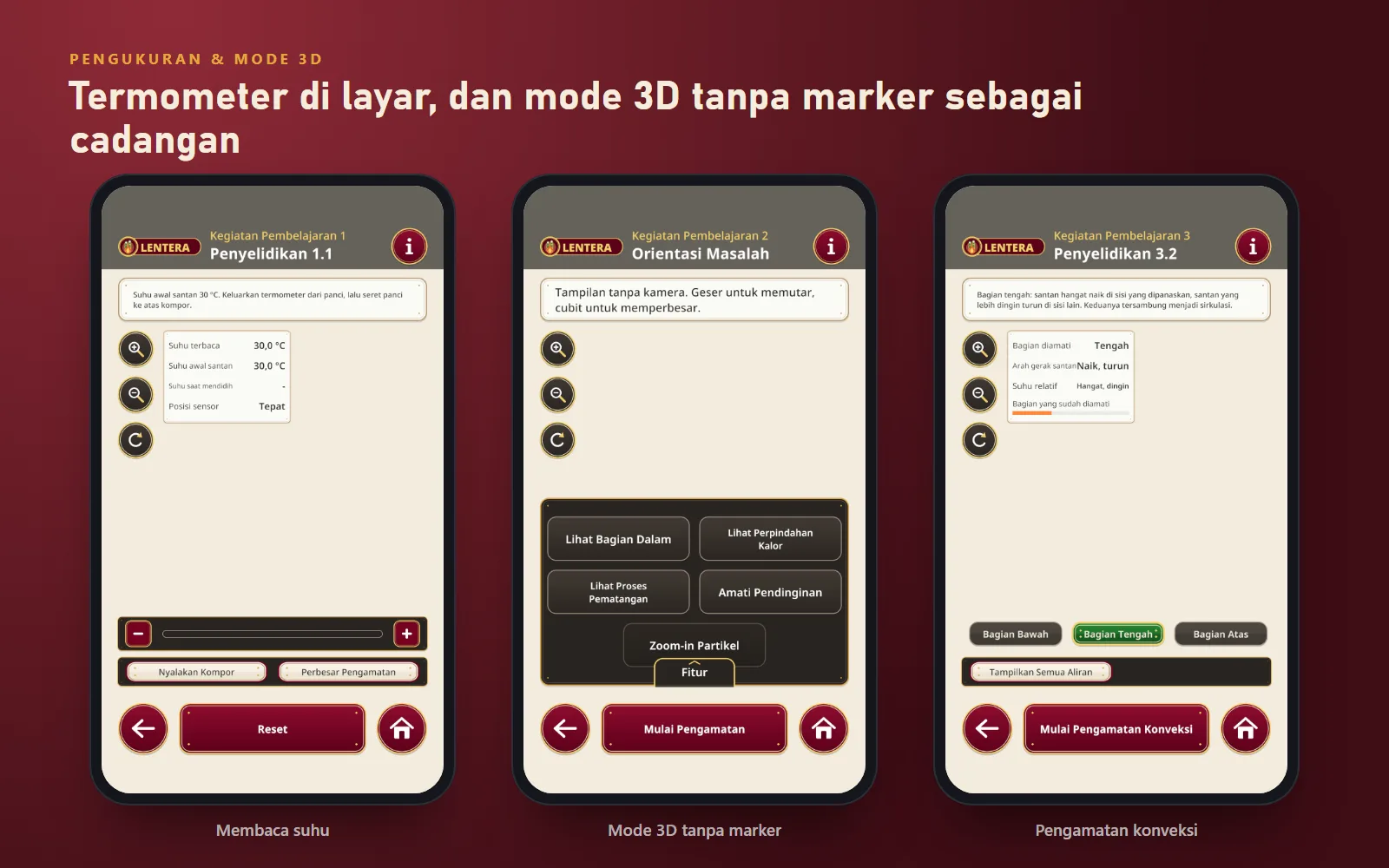
  3. ARmarker scanning with EasyAR, plus a marker-free 3D mode as a fallback
  4. Simulation2D particle zoom for conduction, convection, radiation and expansion
  5. Testingautomated checks in the Unity Editor and hands-on tests on Android phones
04

Solution

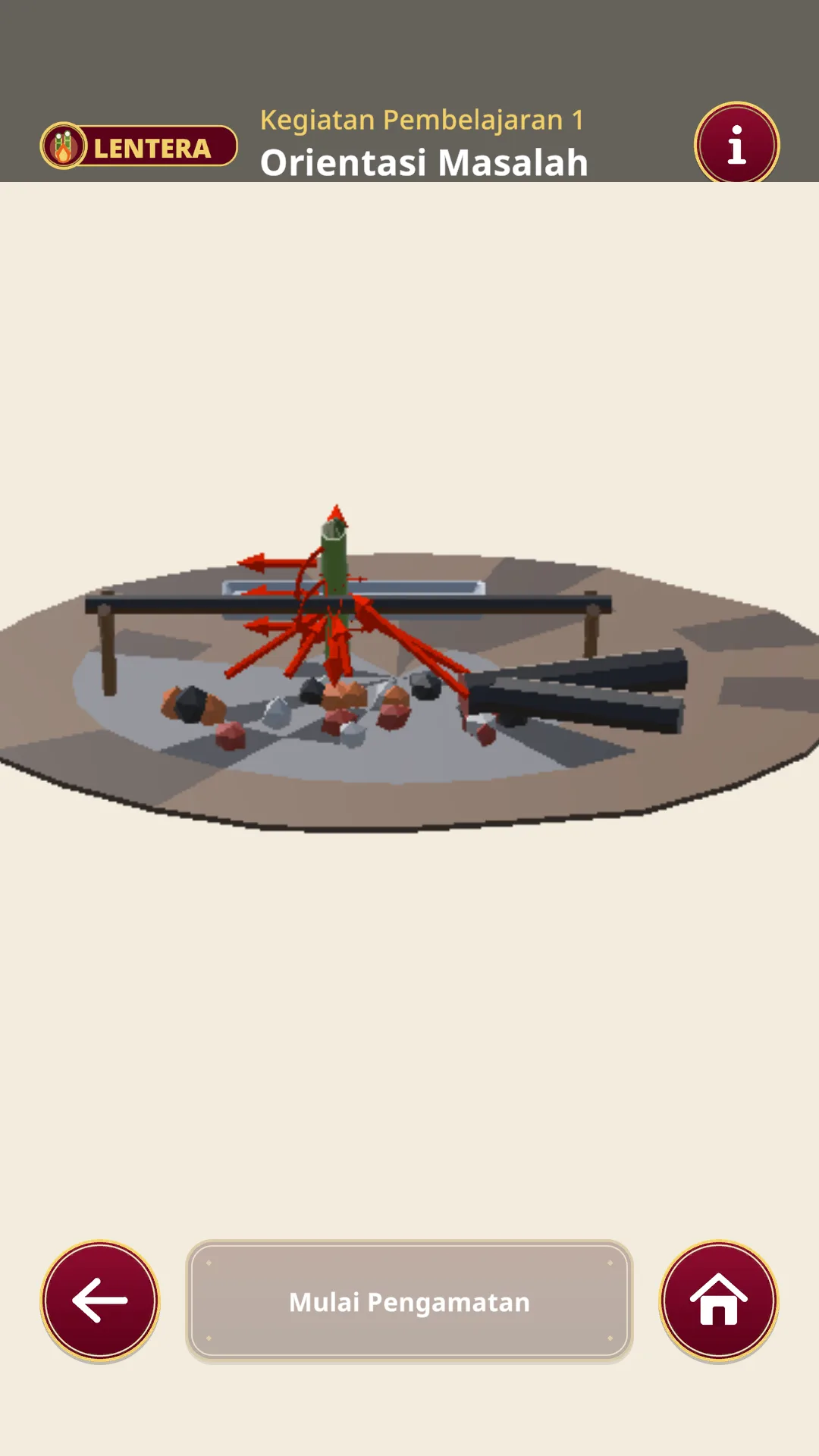
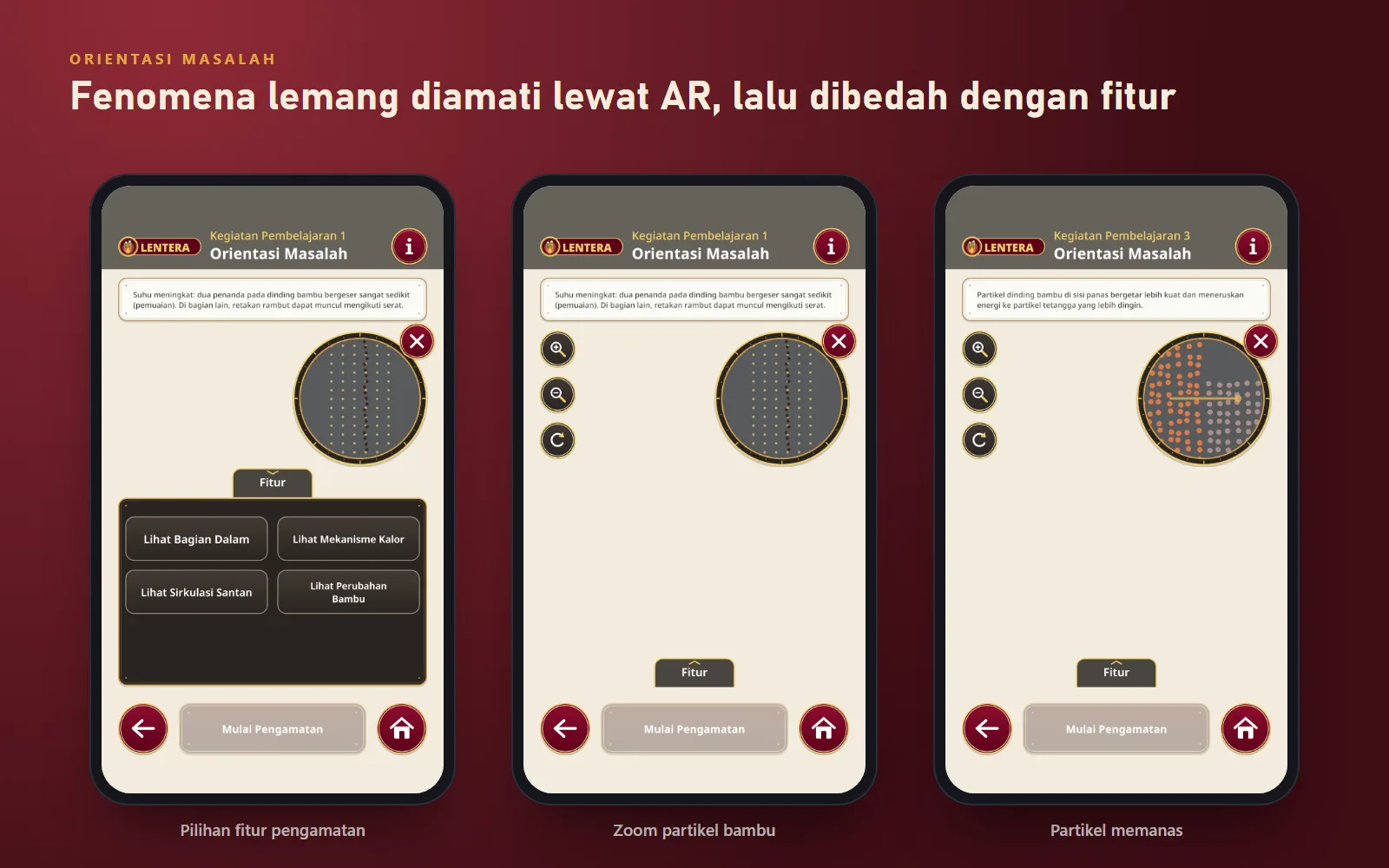
The app is organised into three learning activities with nine scenes. Each activity opens with problem orientation: students scan a marker and watch lemang cooking over embers in AR. Viewing tools reveal the inside of the bamboo, the heat mechanism, the coconut milk circulation and a particle zoom that shows particles vibrating faster as they heat up.

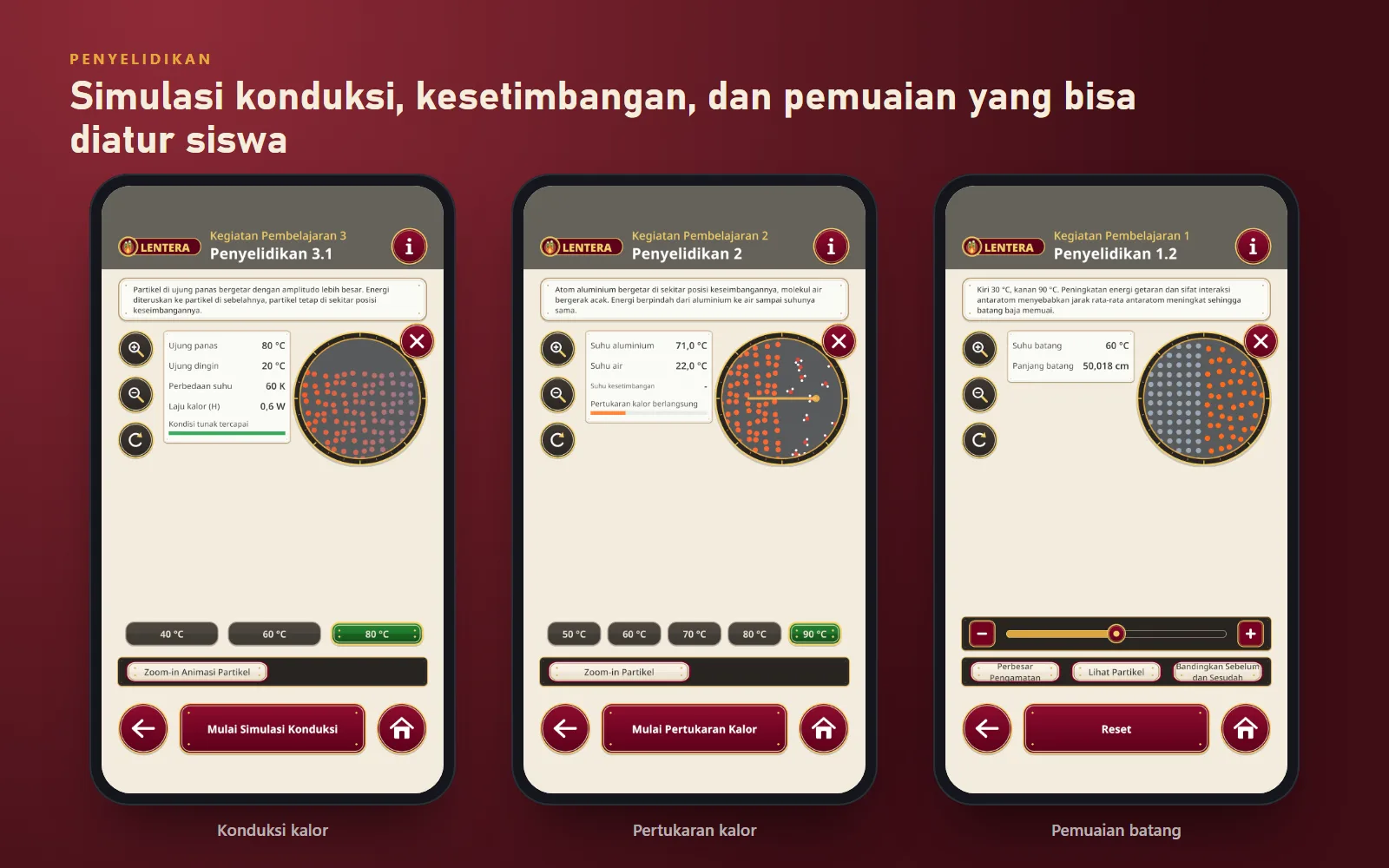
The investigation step offers simulations students can control: heating water to boiling while reading a thermometer, comparing conduction along metal rods, watching heat exchange reach equilibrium, convection, radiation and expansion. Students record the results on their worksheets. If the camera or marker fails, the marker-free 3D mode shows the same objects so the lesson keeps going.

Key features
AR marker scanning (EasyAR) and a marker-free 3D mode · Three learning activities based on Problem Based Learning · 2D particle zoom for conduction, convection, radiation and expansion · Experiment simulations with a thermometer and temperature controls · User guide and simple navigation for students
Performance
Adegan AR utama 28 ribu segitiga, di bawah batas 30 ribu untuk RAM 2 GB
Problem orientation: the lemang phenomenon is observed in AR, then explored with viewing tools
Investigation: conduction, heat exchange and expansion simulations that students control
Lightweight 3D objects: lemang over embers, boiling water and conduction along a metal rod
On-screen thermometer and a marker-free 3D mode as a fallback
05

Results & impact

9AR & simulation scenesLingkup aplikasi, Okt 2026
3PBL learning activitiesLingkup aplikasi, Okt 2026
28 rbtriangles in the main AR scenePemeriksaan Unity Editor, 27 Okt 2026
2 GBminimum target phone RAMSpesifikasi proyek

Have a similar challenge?

Tell us what you need. The FAMEDIA team will scope the timeline and budget with you.

Start a Similar Project
Scan to read the full case study